
As Queensland works to increase housing supply, modular manufacturing is becoming an increasingly important part of how homes can be designed, manufactured and delivered at scale.
Queensland needs more homes than the traditional building pipeline can deliver alone and offsite manufacturing is becoming part of how the state closes that gap.
Increasing housing supply requires an industry with the capacity, workforce, supply chains and delivery models to turn a growing pipeline into completed homes — and that’s part of the conversation today around modular housing in Queensland.¹
A pipeline that needs more than funding
Offsite manufacturing is increasingly considered part of a broader housing delivery strategy, particularly for projects where repeatability, regional delivery, controlled manufacturing and program certainty create real advantages.
Modular housing isn’t a replacement for conventional construction. It’s another way to add delivery capacity — bringing design, manufacturing and site construction together in one coordinated process.
Queensland has committed to one million new homes by 2044, including 53,500 social and community homes. The 2026–27 Queensland Budget includes $5.725 billion over four years for new social and community housing, and at 30 June 2026, 6,925 social and affordable homes were already in construction or under contract across the state.²
As that pipeline grows, the challenge extends beyond funding projects. The industry also needs the capability to design, price, manufacture and construct them — increasing the pipeline also means increasing the capacity to deliver it.
Why manufacturing is part of the answer.
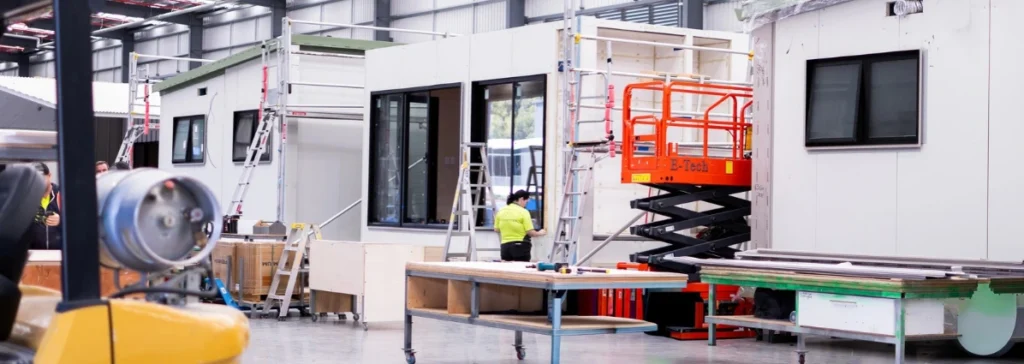
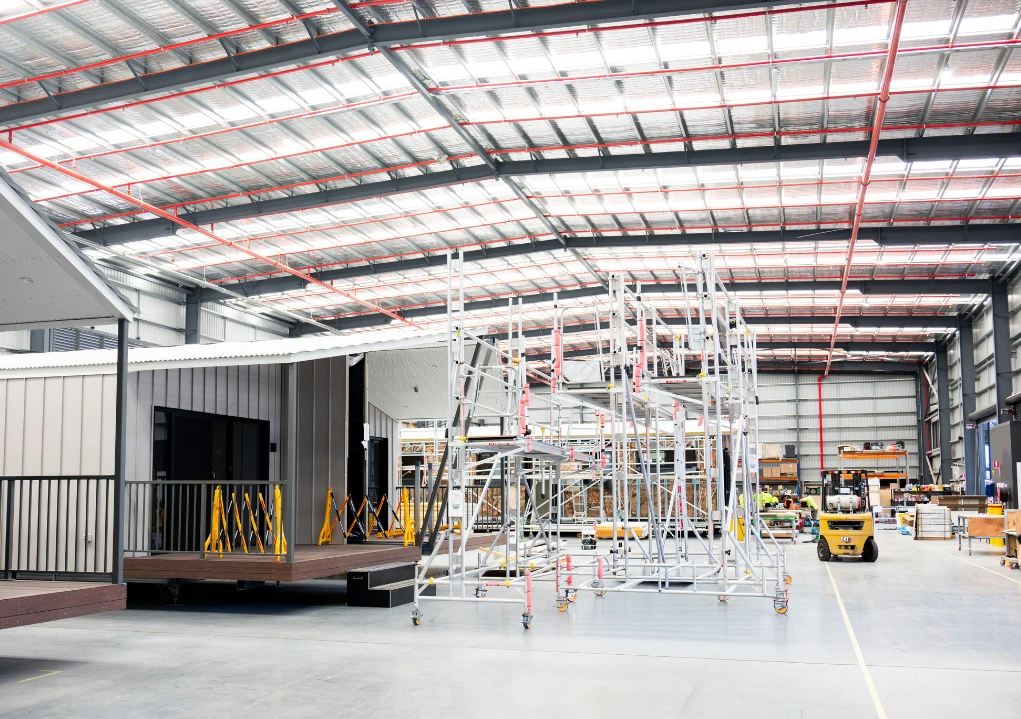
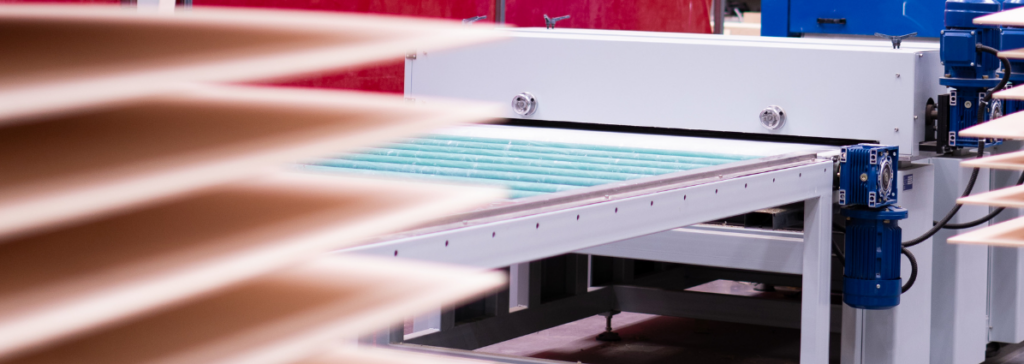
Modular construction rethinks the traditional building sequence. While site preparation, foundations and civil works progress on site, building components or complete volumetric modules are manufactured in a controlled factory environment — concurrently, not sequentially.
That parallel process protects program certainty, while building repeatable systems around materials, assembly, quality control and documentation. At scale, standardisation earns its value: a dwelling doesn’t need to be identical every time, but shared structural systems, components and details can be designed once and manufactured repeatedly.
Modular today represents certainty, repeatability, manufacturing capacity, quality and speed; all these aspects increasingly decide how housing gets delivered at scale.
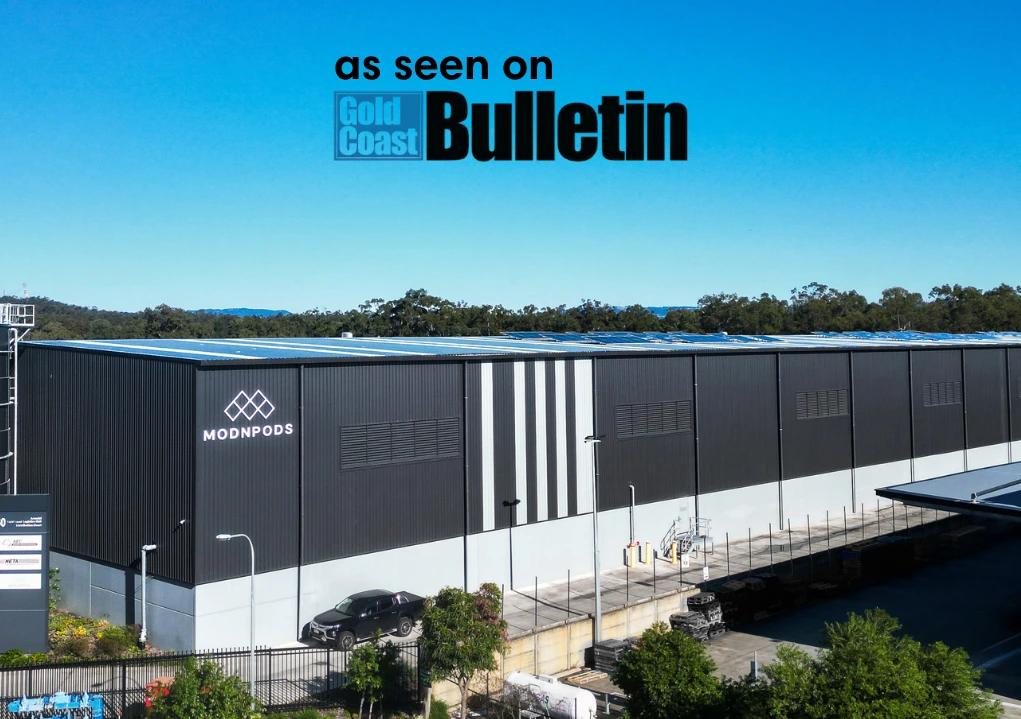
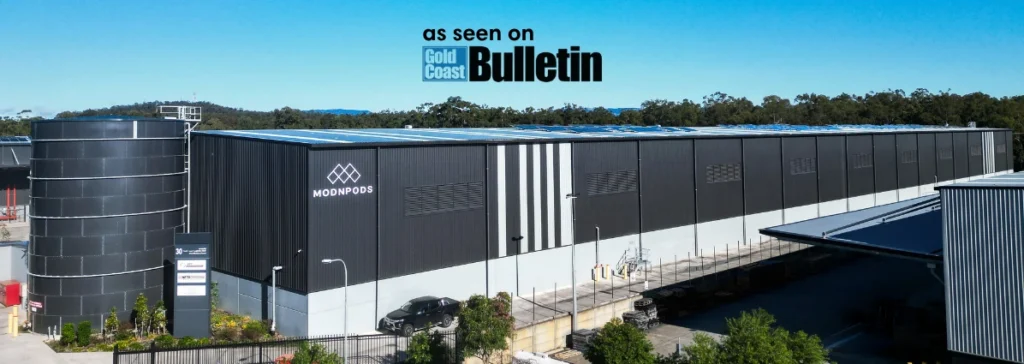
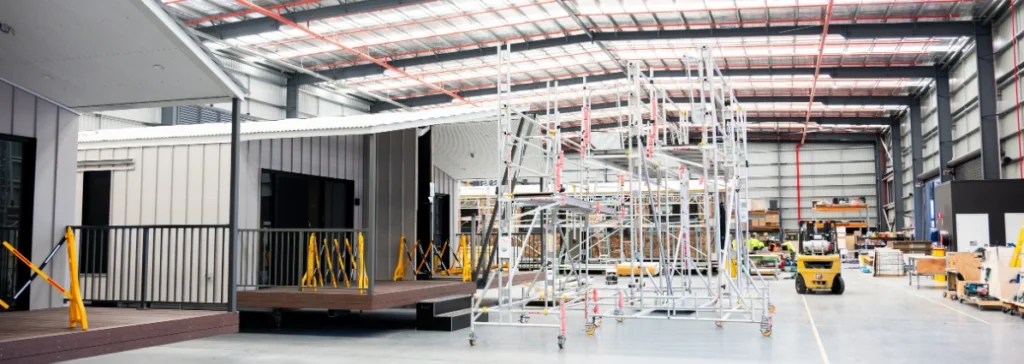
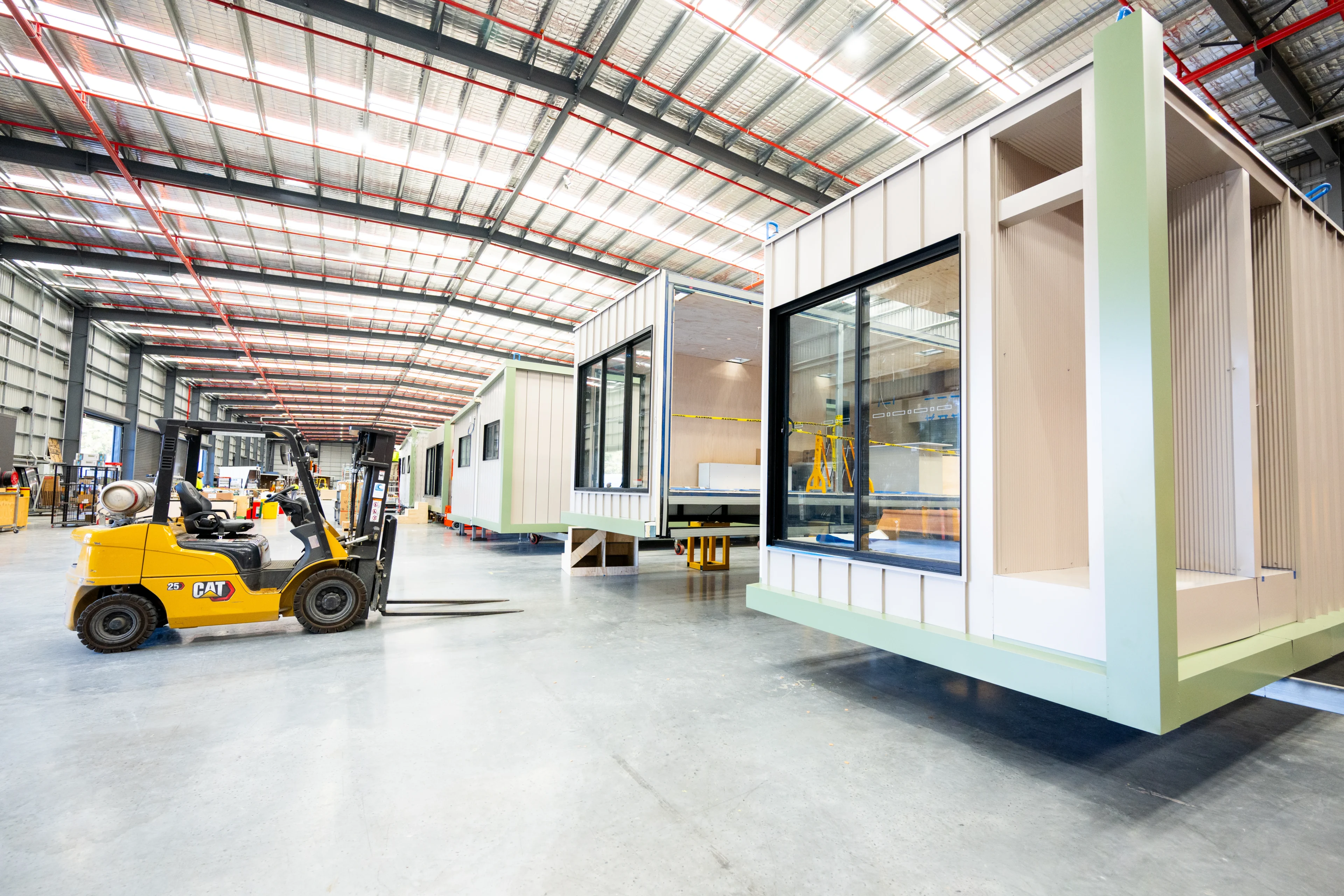
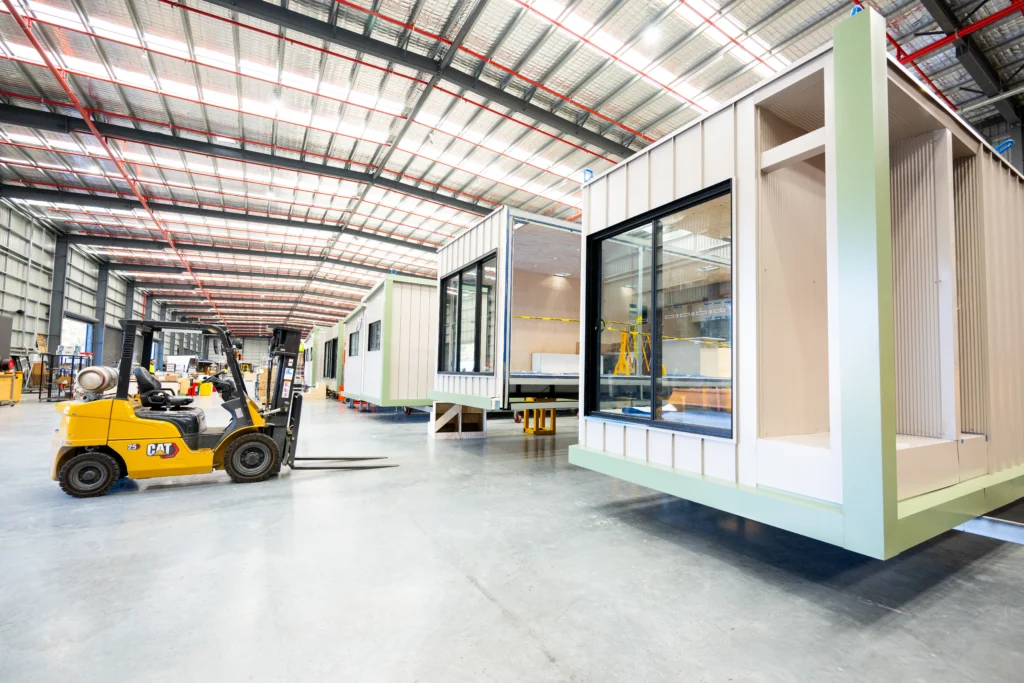
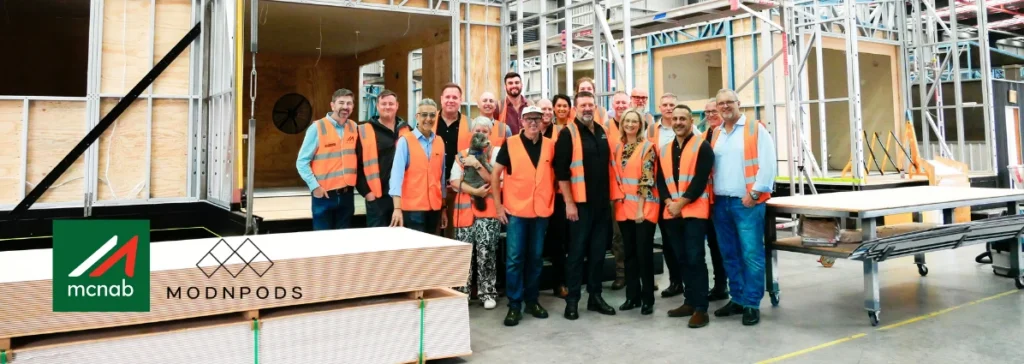
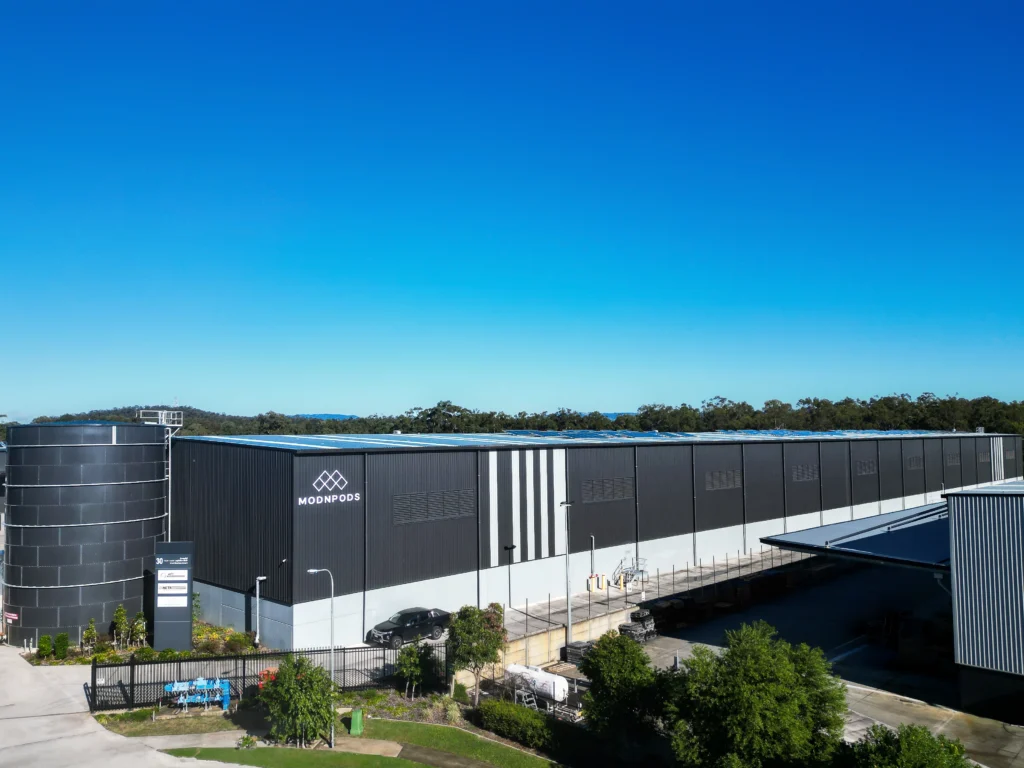
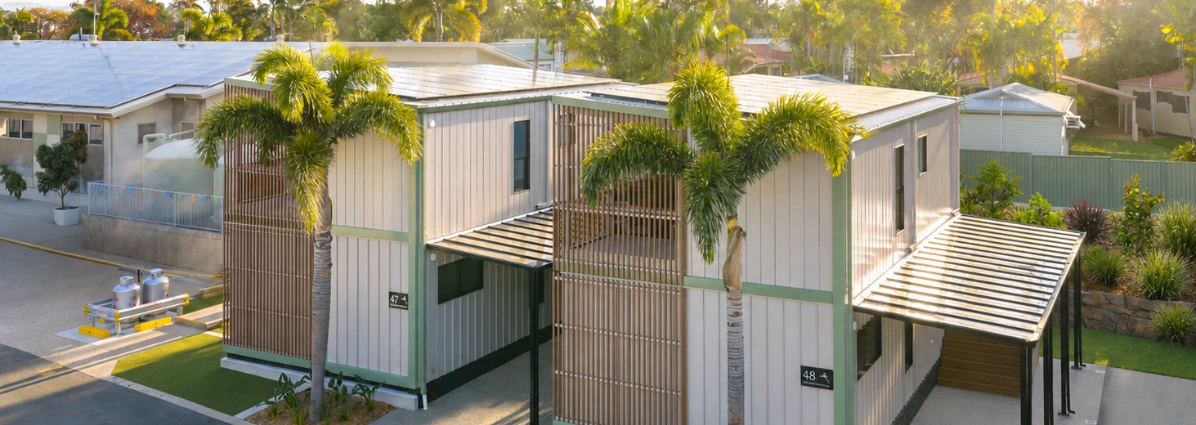
At ModnPods, this is where our manufacturing model is designed to add value. From our 6,300 m² Gold Coast facility, we combine repeatable production systems with adaptable housing typologies, allowing projects to retain site and client-specific outcomes while benefiting from a more controlled manufacturing process.
Queensland is already building this way.
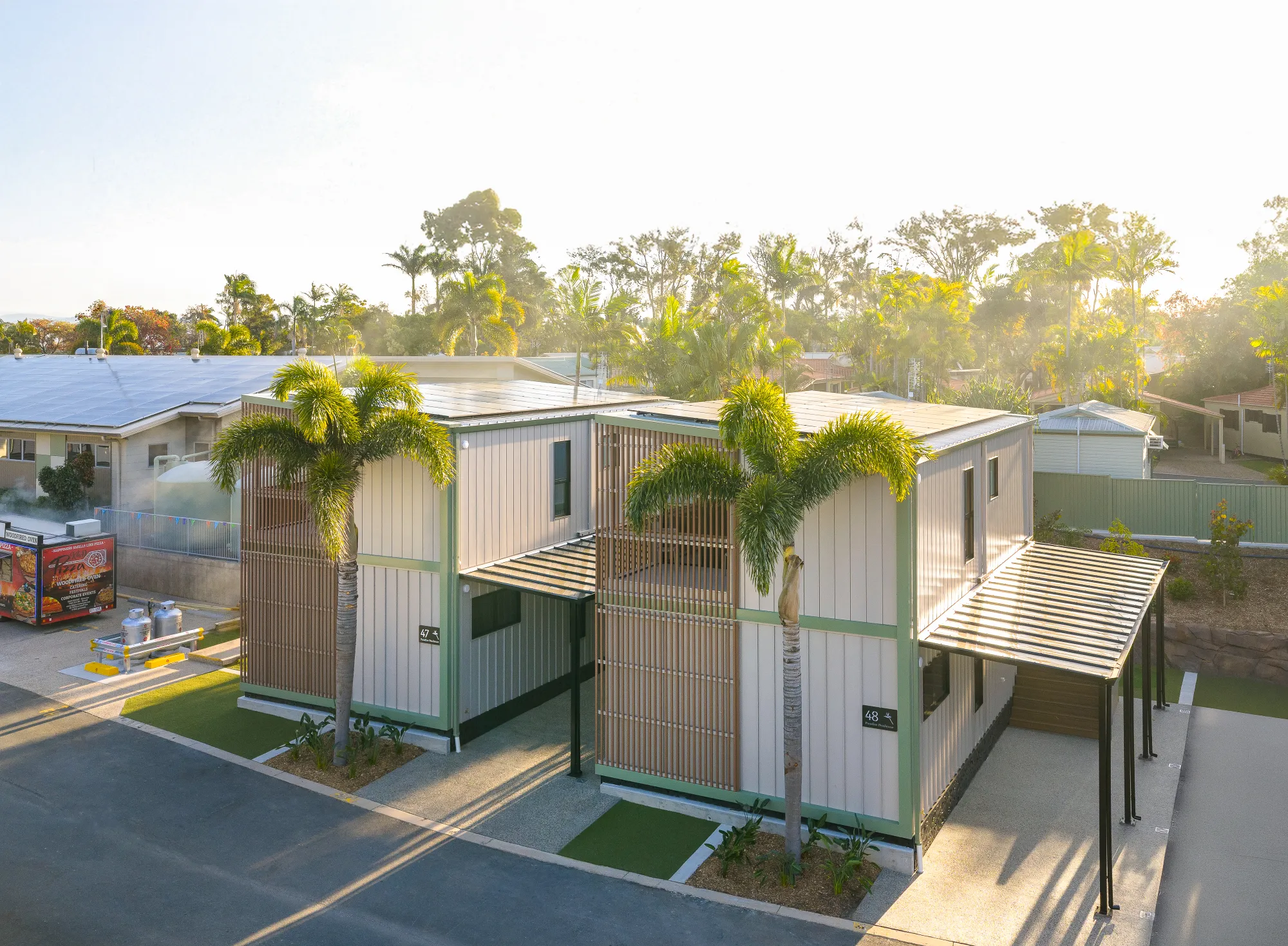
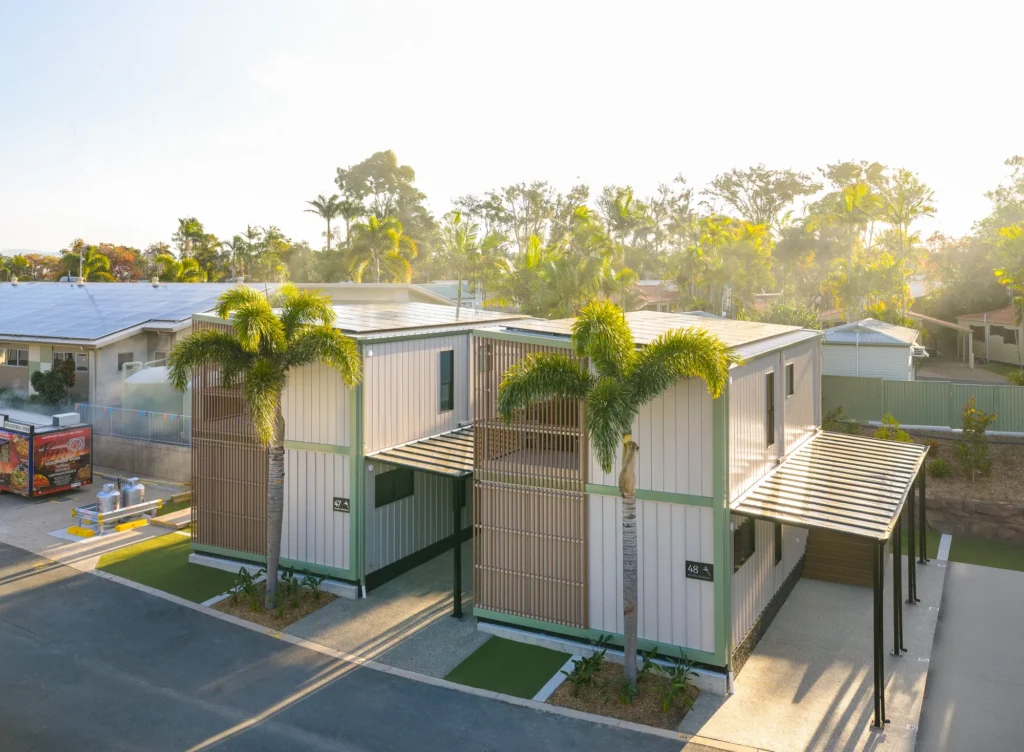
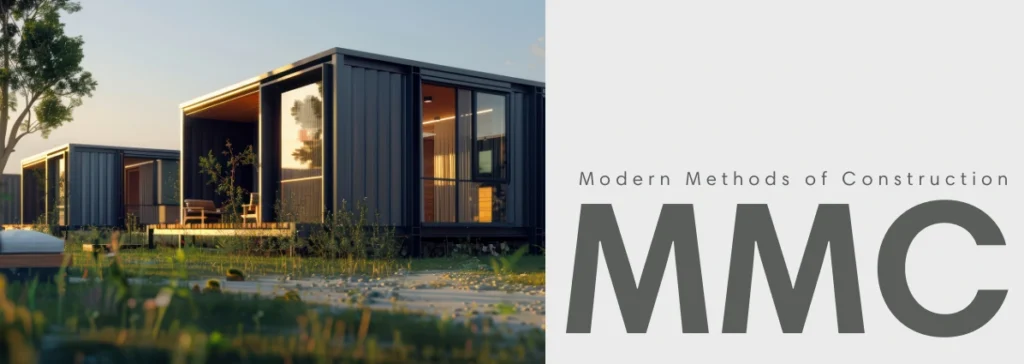
Modular housing in Queensland isn’t a future concept — it’s already part of the state’s delivery approach. Through its Modern Methods of Construction (MMC) program, QBuild is using volumetric, flatpack and kit-of-parts methods to deliver social housing and accommodation for essential frontline workers, particularly across regional and remote Queensland.
The expansion of QBuild’s Portsmith manufacturing facility in Cairns is targeted to increase annual housing production by 40%, supporting greater delivery into regional and remote communities.
Government capacity is also being supplemented through collaboration with private industry and ModnPods is one of the modular manufacturers participating in Queensland’s Modern Methods of Construction program, alongside a broader group of Australian manufacturers working to lift the state’s housing delivery capacity.³
Beyond one home. Building a system.
The modular sector is maturing nationally. Activity is growing across social and community housing, workforce accommodation, regional housing and multi-unit residential development. Manufacturing capacity is expanding, new prefabrication qualifications are formalising specialist skills, and Australian developers are partnering with local and international offsite manufacturers.
A single modular home can demonstrate what offsite construction can achieve. A coordinated pipeline of dwelling types is where it compounds — creating room to apply design for manufacture and assembly, repeatable procurement, production planning and manufacturing efficiency across multiple homes and locations.
For governments, community housing providers and developers planning programs rather than individual projects, that’s where modular construction’s potential becomes significant.⁴
This is also where ModnPods’ approach is increasingly focused — not simply on manufacturing individual dwellings, but on supporting larger housing and accommodation programs where repeatability, production planning and coordinated delivery can create greater value across multiple homes or sites.
What makes a project right for modular?
Not every housing project needs to be modular. Successful delivery starts with identifying where the methodology creates genuine project value — and that begins early. Through Design for Manufacture and Assembly (DfMA), architecture, structure, building services, materials, transport and installation can be resolved together before production starts, while the design is still flexible.
A housing project is likely to offer stronger potential for modular delivery when it combines:
- Repetition across dwelling types and building components, so design decisions are resolved once and applied consistently.
- Sufficient scale — either project size or a repeatable future pipeline — to earn manufacturing efficiency.
- Early coordination between design, manufacturing and construction teams, before the design is locked in.
- Suitable site and logistics — module dimensions, transport routes, crane access and installation methodology shaping the design from the start.
- Standardised major components, with controlled variation for site, orientation, accessibility and brief.
- Program value from running site works and manufacturing concurrently rather than sequentially.
The methodology works best when modular is considered from day one — not applied to a conventional design after the fact.
Building capacity, differently.
Queensland’s housing task will draw on a mix of methods. Traditional construction, modular manufacturing, prefabrication and other modern methods of construction each have a role to play in the state’s future pipeline.
What’s very clear is that increasing housing supply also means increasing the industry’s capacity to deliver it. For projects with the right scale, repetition and delivery conditions, modular manufacturing offers another path — bringing design, manufacturing and construction into one integrated, controlled and repeatable process.
For ModnPods, the opportunity is not simply to manufacture more buildings. It is to work earlier with government, community housing providers, developers, architects and project partners to identify where modular can genuinely improve delivery.
That means understanding the brief, site, scale, logistics and programme early — then developing a solution designed for manufacture, designed for its environment and structured for repeatable delivery.
With established manufacturing capability, experience across government, regional, tourism and accommodation projects, and growing capacity for larger modular and hybrid programs, ModnPods is positioned to support the next generation of housing delivery in Queensland.
Planning a housing or accommodation program in Queensland? Talk to ModnPods early about where modular or hybrid delivery could add value. Contact us.
Frequently asked questions
Is modular construction used for social housing in Queensland?
Yes. Through its Modern Methods of Construction program, QBuild uses volumetric, flatpack and kit-of-parts methods to deliver social housing and accommodation for essential frontline workers, particularly across regional and remote Queensland. Government capacity is also being supplemented through collaboration with private industry.
How many social and community homes is Queensland planning to deliver?
Queensland has committed to one million new homes by 2044, including 53,500 social and community homes. The 2026–27 Queensland Budget includes $5.725 billion over four years for new social and community housing, and at 30 June 2026, 6,925 social and affordable homes were already in construction or under contract across the state.
What makes a housing project suitable for modular delivery?
Repetition across dwelling types, sufficient scale or a repeatable pipeline, early coordination between design and manufacturing teams, suitable site and transport logistics, standardised major components, and program value from running site works and manufacturing concurrently. Modular works best when it is considered from day one, not applied to a conventional design after the fact.
Sources
- Build Metric, www.nationaltribune.com.au
- Wood Central, www.woodcentral.com.au — primary source: Queensland Department of Housing and Public Works, Increasing social and community housing supply (updated 17 June 2026)
- Financial Review, www.afr.com / Built Off Site, www.builtoffsite.com.au — primary source: Queensland Department of Housing and Public Works, Modern Methods of Construction program (updated 23 July 2026)
- www.sunraysiadaily.com.au / Yahoo News, www.au.news.yahoo.com